Most of the paintings and objects which define Surrealism as a movement are still in copyright across the UK and EU, since the artists who made them mostly lived well into the twentieth century. Every image below is loaded from the collecting museum's website and linked through to that museum's page, so credit and any copyright stay with the museum. Any institutions that do not make a usable image available on their own site, are represented instead by Wikipedia's hosted copy.
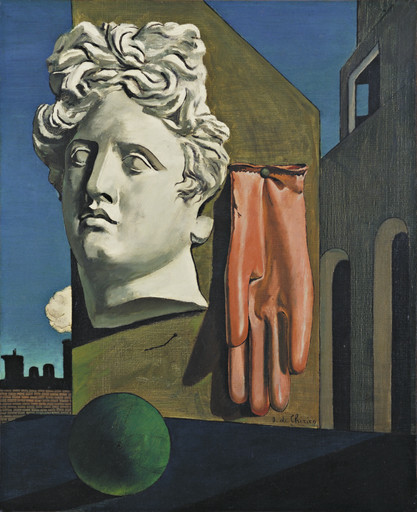
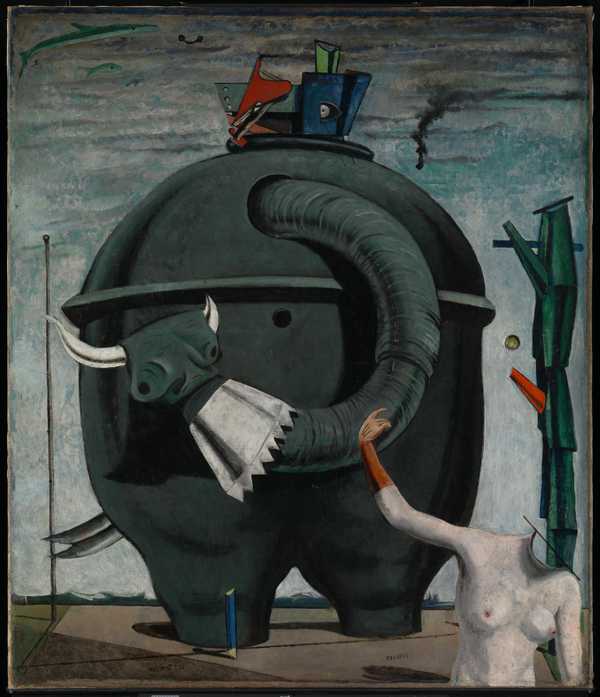
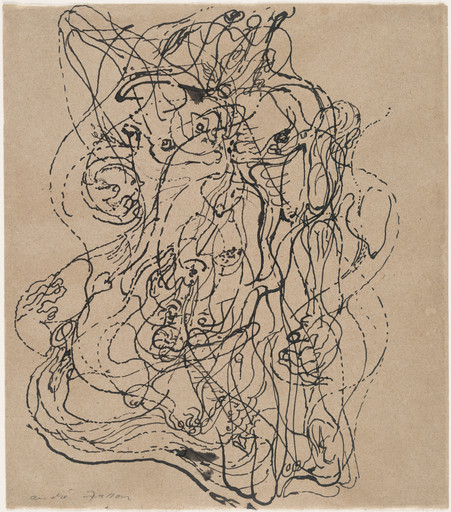
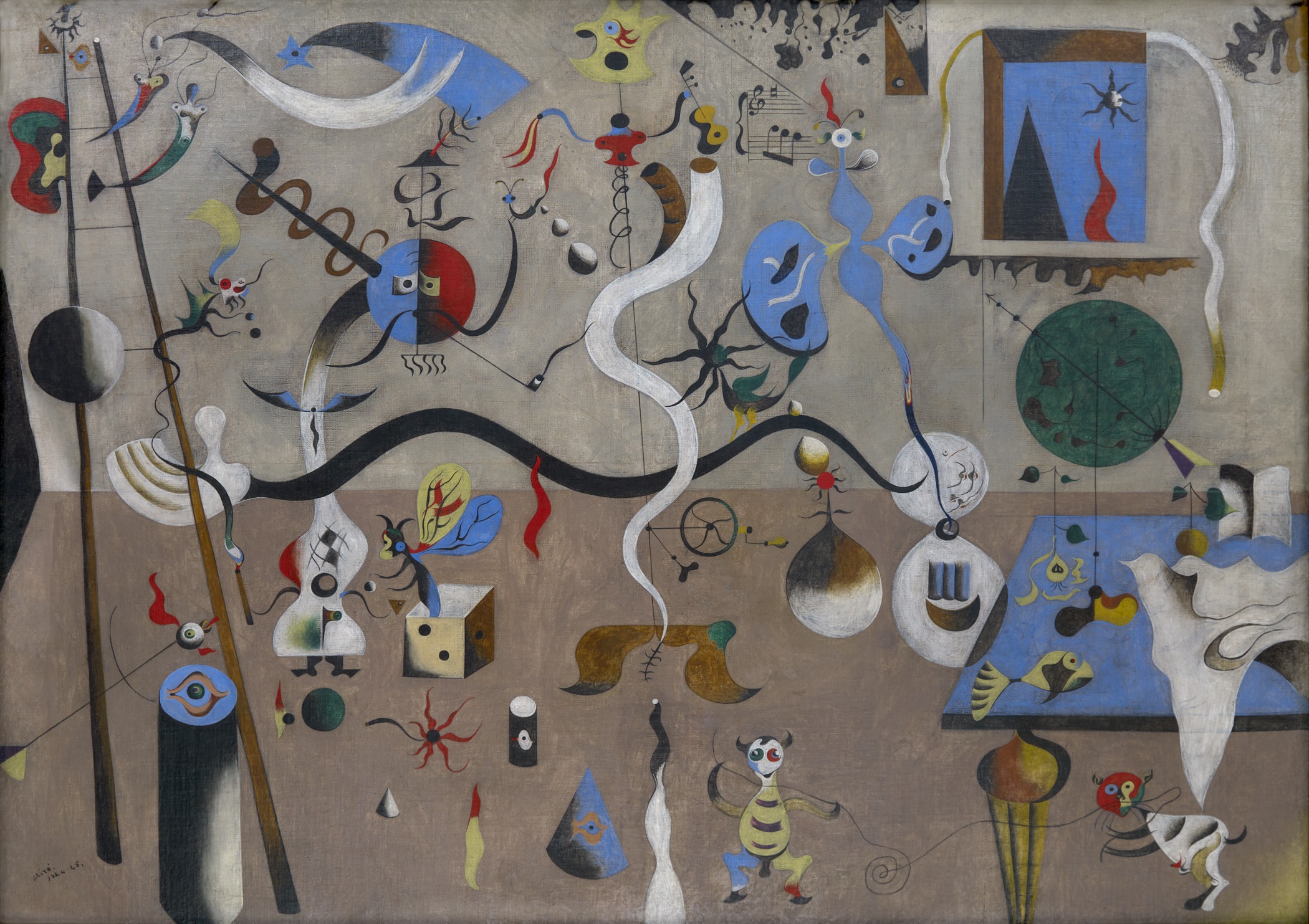
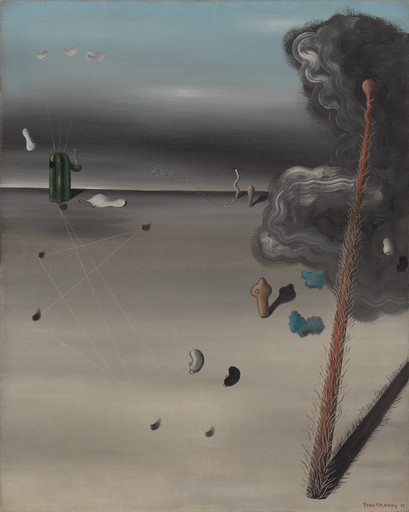
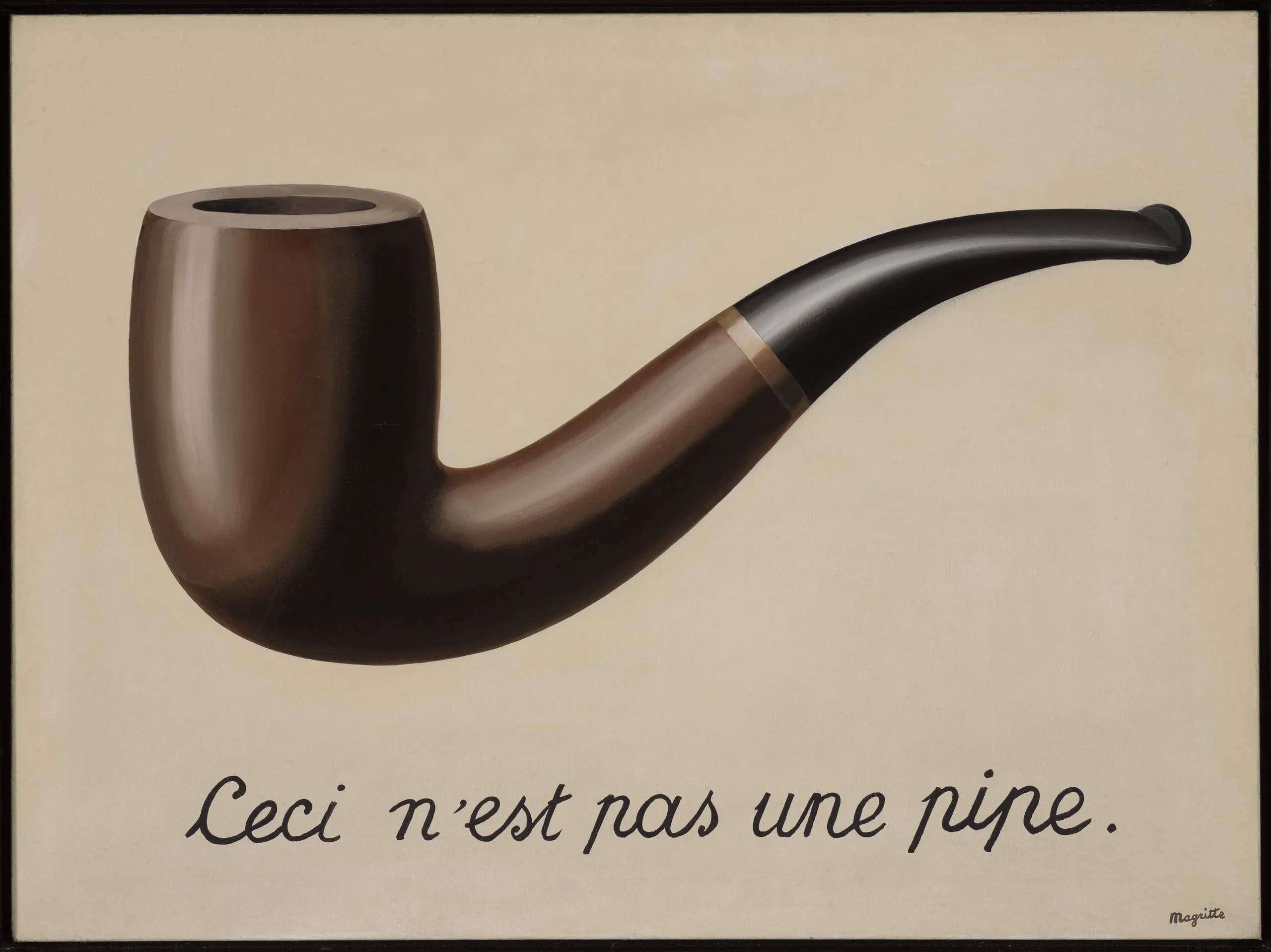
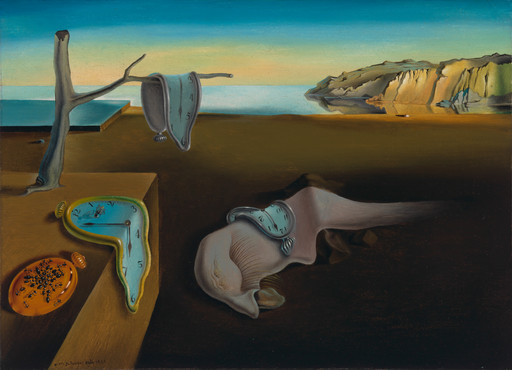
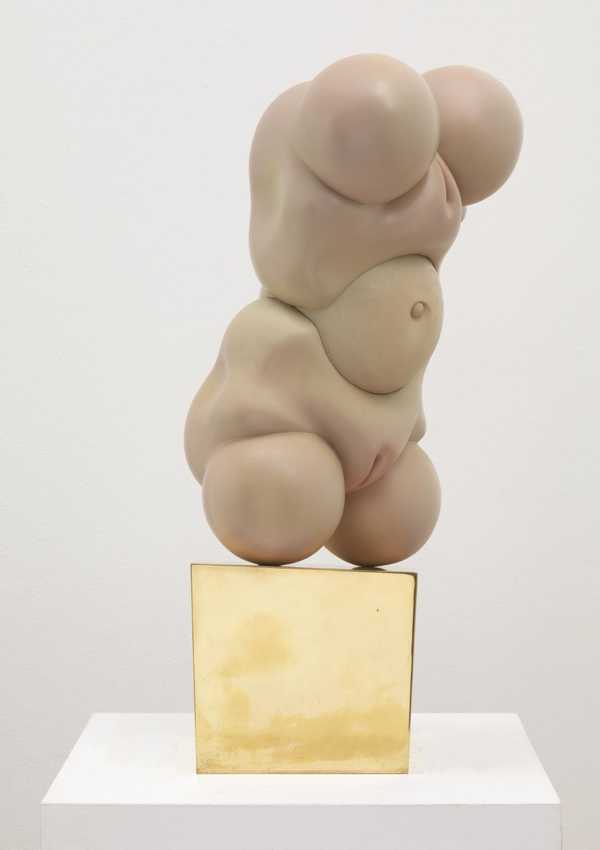
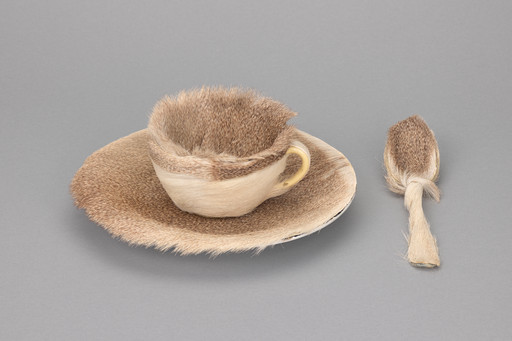
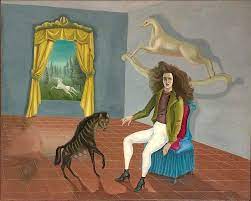
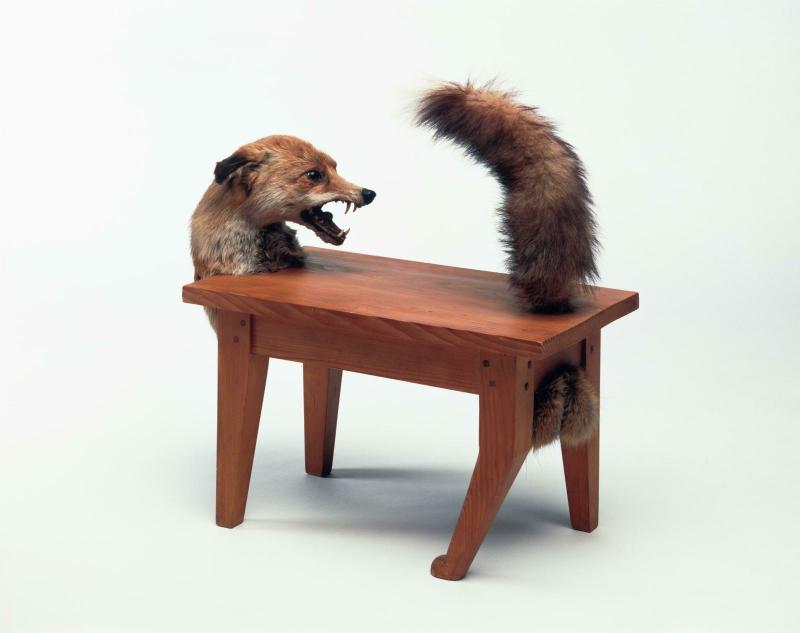
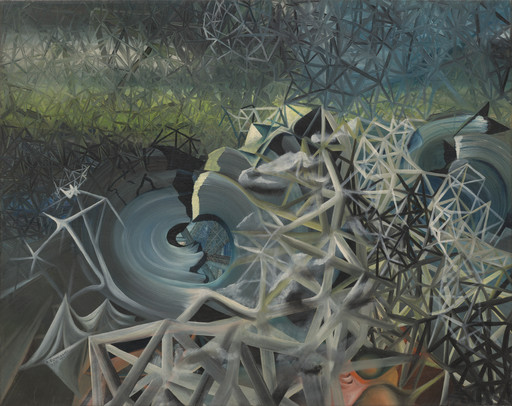
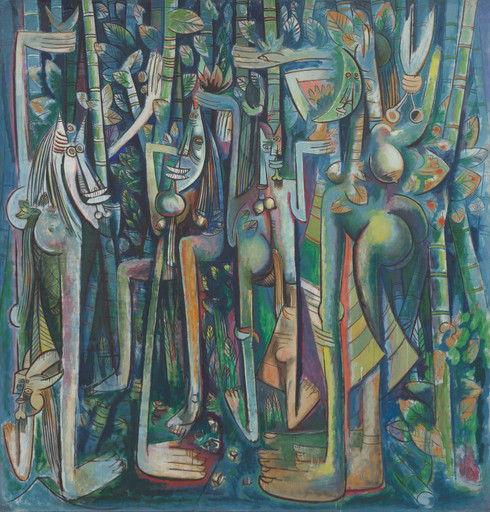
1. Giorgio de Chirico: The Song of Love (1914). Painted in Paris in the summer of 1914, this canvas uses a plaster cast of a classical statue's head, a pink rubber glove pinned to a board, and a green ball, set against a brick wall with a steam train trailing smoke in the distance. The poet Guillaume Apollinaire, a friend of de Chirico's at the time, later recalled watching him buy the glove and sensing that its appearance in a painting would carry an unsettling incurrence to the viewer. Breton named de Chirico's work, alongside Lautréamont's poetry, as one of the two fixed points from which Surrealism took its bearings, and this painting, made a full decade before the movement had a name, is usually treated as the clearest anticipation of what Surrealist painting would become. MoMA, New York.2. Max Ernst: The Elephant Celebes (1921). A hulking, boiler-like elephant with a curved, hose-like trunk dominates an otherwise bare plain, its head ringed with horns and a pair of fish tails dangling below. Ernst painted it in Cologne in 1921, three years before Breton's manifesto gave the movement its name, drawing the silhouette from a photograph of a Sudanese corn bin and pairing it with his own collage instincts. The title comes from a German schoolyard rhyme about an elephant from Celebes with an unmentionable smell. It has been in Tate's collection since 1975 and is widely treated as the first fully realised Surrealist painting in the tradition de Chirico had opened up. Tate, London.3. Man Ray: Le Violon d'Ingres (1924). Man Ray photographed his model and collaborator Kiki de Montparnasse from behind, then added two painted f-holes to her lower back, turning her body into the body of a violin. The title puns on the painter Ingres, an amateur violinist as well as a painter of odalisques, and on the French idiom "violon d'Ingres," a hobby pursued alongside a person's vocation. Man Ray worked mainly in the darkroom using rayographs and solarisation to extend the automatist project into photography, and this image remains the best known result of that whole body of work. A gelatin silver print of it sold at Christie's in 2022 for $12.4 million, a record price at auction for any photograph. J. Paul Getty Museum.4. André Masson: Automatic Drawing (1924). Masson made this small ink drawing by letting his pen move across the paper as fast as possible with no fixed subject in mind, the greatest demonstration of the method Breton had just theorised in the Manifeste du surréalisme. Fragments of bodies and faces surface out of the resulting tangle of lines, some of them left just as the hand produced them and others reworked once Masson recognised a shape worth keeping. He extended the same principle later in the decade into sand paintings, flinging sand onto a gessoed canvas to introduce an element of stochasticism the artist could not control. Made the same year that Surrealism acquired its name, this drawing is among the most pure surviving records of automatism as Breton first defined it. MoMA, New York.5. Joan Miró: The Harlequin's Carnival (1924–25). Miró crowded a small canvas with dozens of dancing, half-invented creatures rendered in flat, saturated colour: a harlequin whose diamond-patterned body doubles as a guitar, half-human revelers with animal faces, a ladder fitted with an eye and an ear, and, easy to miss in the lower right, a black cat dancing on its hind legs, generally identified as Miró's own pet. He later stated that hunger shaped the picture; it was painted in a bare Paris studio at a period when he had almost no money and reportedly lived for stretches on little but radishes, and some of its more skeletal, gap-ribbed figures are read as a fairly telling record of his own condition that winter. The painting took the better part of a year to finish, an unusually long gestation for an artist who prized spontaneity above almost everything else. It is treated as the most fully worked out of Miró's biomorphic paintings of the 1920s. Buffalo AKG Art Museum.6. Yves Tanguy: Mama, Papa Is Wounded! (1927). Tanguy painted isolated, geologic forms adrift in a vast grey-violet void, a style he arrived at almost entirely without formal training after seeing a de Chirico painting from the window of a passing bus. The title is traced from a psychiatric case history describing a child's word-association game, a phrase Tanguy came across in a book on child psychiatry and kept for its flat, clinical strangeness beside the picture's dreamlike content. Breton owned the painting for a period before it passed to Valentine Hugo and then to MoMA in 1936. Tanguy's landscapes rarely name the objects scattered through them, and this one is typical: the biomorphic shapes read as bones, tools, or figures depending on how long you look. MoMA, New York.7. René Magritte: The Treachery of Images (1929). Magritte painted a brown pipe and captioned it "Ceci n'est pas une pipe": this is not a pipe. The statement is literally true, since the canvas holds paint and not tobacco, and the friction between word, image, and object it sets off became one of the most reproduced philosophical jokes in twentieth-century painting. Magritte worked from a small, recurring vocabulary of bowler hats, apples, and windows, deployed with a dry logic. LACMA has held the work since 1978. LACMA, Los Angeles.8. Salvador Dalí: The Persistence of Memory (1931). At 24 by 33 centimetres, Dalí's best-known painting is smaller than most reproductions of it suggest, showing limp watches draped over a branch, a ledge, and a fleshy sleeping form, set against the coastline near Port Lligat, the fishing village where Dalí kept a house for most of his life. He described the melting watches as "the camembert of time," an image he later said came to him after watching a wheel of cheese soften in the sun. MoMA acquired the painting in 1934, and it has since become probably the single most reproduced Surrealist image, appearing on more posters, mugs, and magnets than any of Dalí's more technically ambitious later work. The ants swarming one watch are a recurring theme elsewhere in Dalí's paintings, standing in for decay in the same way the melting does. MoMA, New York.9. Hans Bellmer: The Doll (1936, reconstructed 1965). Bellmer built his first doll in Berlin between 1933 and 1934, a life-sized construction of a wood-and-metal skeleton covered in plaster and papier-mâché, curated with ball joints so its limbs could be arranged into positions no human body could hold. He self-published ten photographs of it in Karlsruhe as Die Puppe in 1934, and that winter eighteen of the images, sent to Paris through his cousin, appeared in the Surrealist journal Minotaure, an introduction that won him immediate standing in Breton's circle. He built a second, more radical doll around 1935, its torso doubled and its limbs interchangeable, and exhibited versions of the work through the 1936 Paris Surrealist exhibition of objects. Tate's cast, painted aluminium on a brass base, is a 1965 reconstruction; the original plaster and papier-mâché figures did not survive. Tate, London.10. Meret Oppenheim: Object (1936). Oppenheim covered a teacup, saucer, and spoon entirely in the fur of a Chinese gazelle. The piece has an unusually well documented origin: at a Paris café with Pablo Picasso and Dora Maar, Picasso remarked that anything could be covered in fur, and Oppenheim, then twenty-three, replied "even this cup and saucer" before going home and doing exactly that. Alfred Barr bought the piece for MoMA after its appearance in the museum's 1936–37 Fantastic Art, Dada, Surrealism exhibition, making it the first work by a woman to enter MoMA's permanent collection. MoMA, New York.11. Leonora Carrington: Self-Portrait (Inn of the Dawn Horse) (1937–38). Carrington began this painting in London in 1937, not long after leaving her wealthy English family to be with Max Ernst, and finished it the following year in Paris. She shows herself perched on the edge of a chair, hair wild, reaching toward a lactating hyena while a white rocking horse hangs suspended above her and a second, galloping horse is visible through the window behind. The picture is usually treated as Carrington's first fully achieved Surrealist painting and was shown at the 1938 Exposition Internationale du Surréalisme in Paris, before entering the Metropolitan Museum of Art in 2002 as part of the Pierre and Maria-Gaetana Matisse Collection. The Met does not make a usable image of the painting available on its own site, so the copy above is Wikipedia's hosted image of the work. Metropolitan Museum of Art, New York.12. Victor Brauner: Wolf-Table (1939–47). Brauner first painted the imagined object in 1939, in two canvases titled Fascination and Espace psychologique, before building it as a three-dimensional piece for the 1947 International Surrealist Exhibition in Paris. The base is an ordinary wooden table, yet grafted onto one end is the head, tail, and paws of a taxidermied fox, so that the most domestic of objects, the thing a family eats from, becomes something with teeth. Brauner had lost his sight in one eye in a 1938 accident that several of his fellow Surrealists later treated as an eerie fulfilment of imagery he had painted years earlier, and Wolf-Table belongs to the same body of work in which ordinary household objects turn hostile or alive. It entered the Centre Pompidou's collection through a 1974 bequest from Brauner's widow, Jacqueline Victor-Brauner. Centre Pompidou, Paris.13. Óscar Domínguez: Nostalgia for Space (1939). Domínguez grew up in Tenerife, and much of his work carries the volcanic terrain and strange light of the Canary Islands with it. This painting takes that landscape into a colder, more cosmic register, a female torso opening onto a starry void among rock forms that could belong equally to a beach or another planet. He had invented decalcomania a few years earlier, pressing gouache between two sheets of paper to generate unplanned textures Breton called "decalcomania without preconceived object". Peggy Guggenheim gave the painting to MoMA in 1952. Domínguez suffered from acromegaly, a condition that progressively deformed his hands and face over his adult life, and he died by suicide in Paris on the last night of 1957. MoMA, New York.14. Frida Kahlo: The Two Fridas (1939). Kahlo painted this double self-portrait in the months after her divorce from Diego Rivera, showing two seated versions of herself, one in the white Victorian-style dress associated with her father's European side, the other in the Tehuana dress she wore as a mark of Mexican identity, their hands joined and their exposed hearts connected by a single vessel. At more than five and a half feet square, it was the first large-scale canvas Kahlo attempted. The Instituto Nacional de Bellas Artes acquired it in 1947 and later transferred it to the Museo de Arte Moderno, where it remains one of the most visited paintings in Mexico. Breton met Kahlo in 1938 and declared her a Surrealist, reportedly calling her work "a ribbon around a bomb," but Kahlo rejected the label outright, saying she had never painted dreams, only her own reality. She appears here on the strength of Breton's insistence and her presence in the movement's exhibitions, with her own objection left standing and not smoothed over. The Museo de Arte Moderno does not host its own object page for the work, so the image above is Wikipedia's copy. Museo de Arte Moderno, Mexico City.15. Wifredo Lam: The Jungle (1942–43). Lam, born in Cuba to a Chinese father and a mother of mixed African and Spanish descent, painted this on two joined sheets of kraft paper after returning to Havana in 1941 following years in Europe, where he had worked in close contact with Picasso. Figures with mask-like faces drawn from Afro-Cuban santería iconography stand half-hidden among dense sugarcane and broadleaf vegetation, their hands and feet elongated into shapes that recall both tools and roots, a composition read since as an oblique record of Cuba's history of slavery and plantation labour. MoMA acquired the painting in 1945, and for decades it greeted visitors near the museum's entrance, becoming the work most identified with Lam's career. It remains one of the few classical Surrealist paintings by an artist of the African diaspora, a fact that the movement's self-image, centred so heavily on Paris, rarely made room for. MoMA, New York.


Discussion