Gamma-Gamma Coincidence Spectroscopy of 175Au
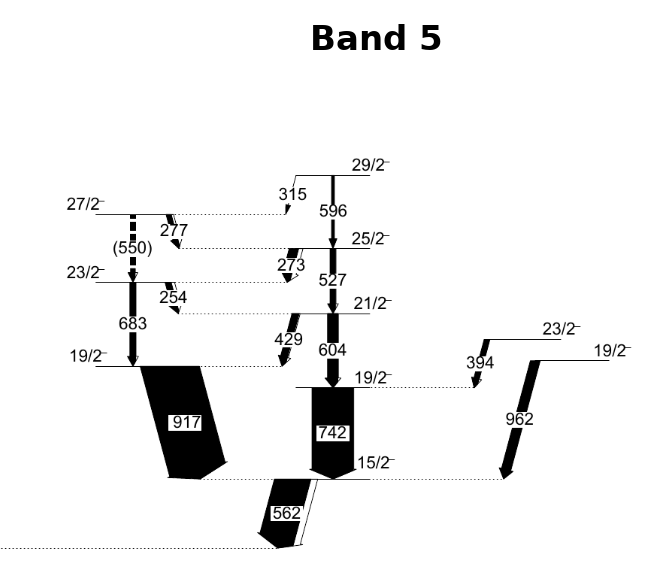
My final-year physics project at the University of Liverpool, supervised by Prof Robert Page and Prof David Joss: a recoil-decay tagged γ-γ coincidence spectroscopy study of 175Au. 175Au sits below the Z = 82 shell closure, where near-spherical hole configurations compete with deformation-driving intruder excitations, a textbook setting for shape coexistence. Using recoil-decay tagged data from the JUROGAM + RITU + GREAT setup at the University of Jyväskylä Accelerator Laboratory, I built an updated level scheme (including 30 previously unpublished weak linking transitions), used rotational diagnostics to argue for distinct intrinsic deformations across the observed bands, and built a reproducible coincidence-analysis workflow with a machine-learning parameter-selection stage for a deterministic coincidence interpreter.
What's in the report
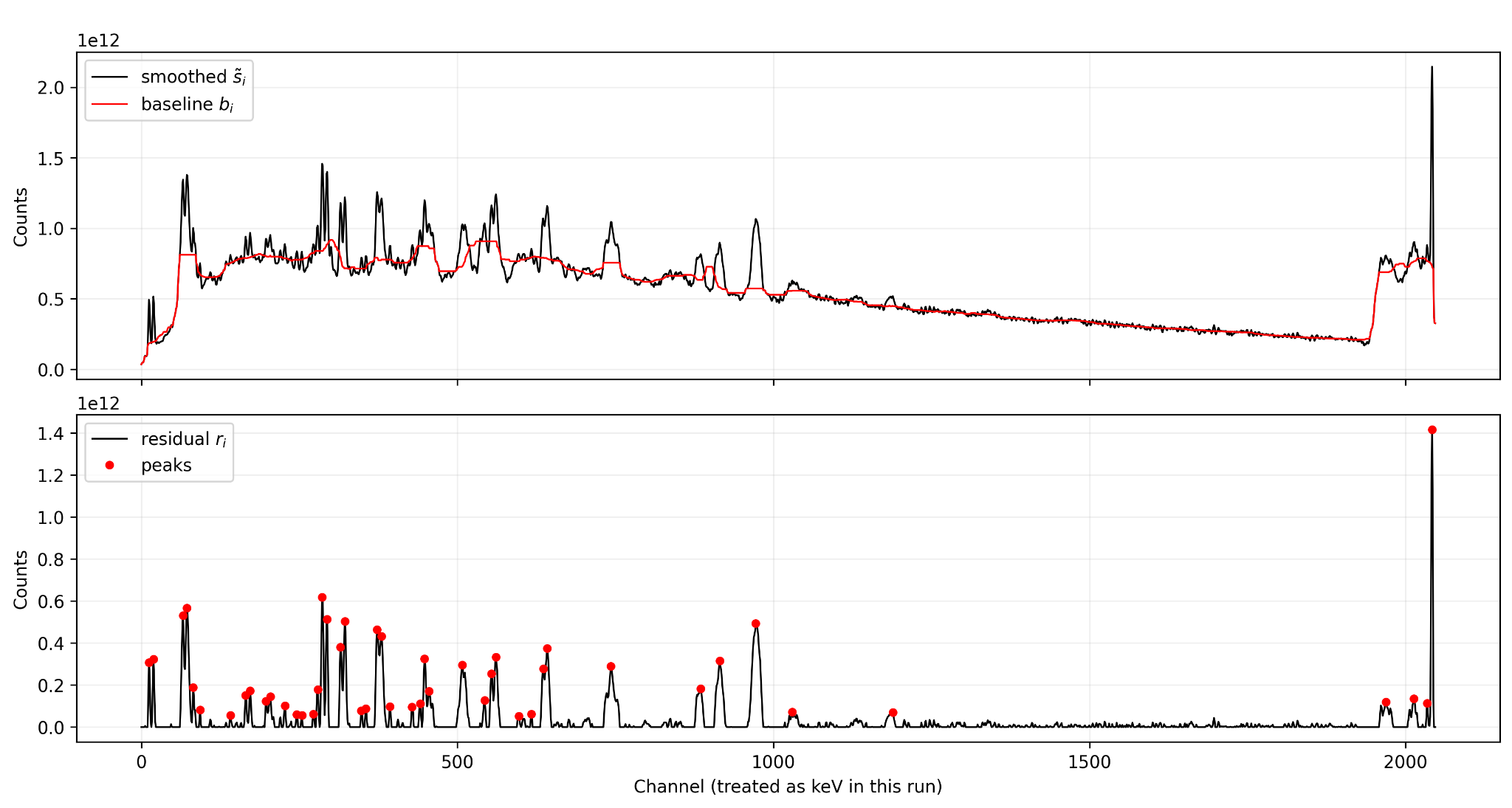
The full report covers the nuclear-structure background (liquid-drop and Nilsson models, rotational coupling schemes, signature and staggering, Harris plots), the experimental setup (JUROGAM's HPGe array, the RITU gas-filled recoil separator, and the GREAT focal-plane spectrometer), the coincidence-gating analysis workflow in Radware, the resulting level scheme and band-by-band interpretation for 175Au, and the machine-learning assisted coincidence interpreter built to speed up peak-finding and cascade-seeding on future datasets. It closes with systematics comparisons against neighbouring Au, Hg, and Pt isotopes, and full appendices covering the level-scheme validation checks, the angular-momentum coupling logic behind the band assignments, and supplementary figures.
This was an assessed university report, not something written for public distribution, so I'm keeping the PDF behind a password. Happy to share it directly if you'd like to read it.
Discussion