Velostat Pressure-Sensitive Bed Sheet
A low-cost pressure-mapping bed sheet, built from a layered grid of Velostat (a piezoresistive plastic film that lowers its resistance under pressure) and copper-tape electrodes, read out by a microcontroller and rendered as a live heatmap.
What it covers
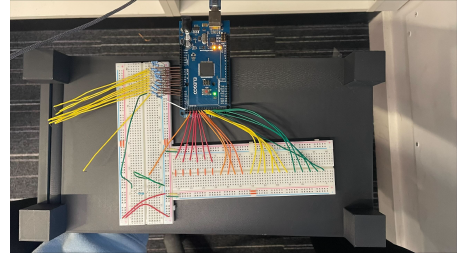
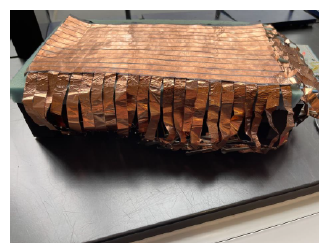
Pressure ulcers and unwitnessed falls are both, in essence, problems of not knowing what's happening to someone's body against a surface over time. A grid of Velostat sandwiched between rows and columns of copper tape turns that into a readable signal: each intersection acts as a pressure-dependent resistor, and scanning rows against columns with a microcontroller gives a full pressure map of the sheet at a given moment. Wiring, described here, runs the row/column matrix into a microcontroller (an Arduino Mega, chosen for its high pin count) over a breadboard, with the readout loop scanning the matrix and streaming pressure values out for visualisation.
Headline results
- A working row/column Velostat matrix, wired end-to-end from sensor sheet through breadboard to microcontroller, producing a usable resistance-to-pressure signal at each grid intersection.
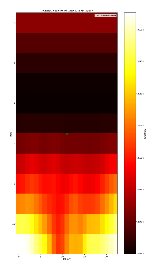
- Live pressure readings render as a 2D heatmap (pictured), showing the concentration and distribution of load across the sheet, the basis for detecting sustained pressure in one place (relevant to ulcer risk) or its sudden absence (relevant to falls).
- The copper-tape/Velostat construction keeps the whole sensor sheet low-cost and physically flexible compared with commercial pressure-mapping mattresses, at the cost of a coarser and noisier grid resolution.
Discussion