Report on the Effects of UKRI Funding Cuts
UK Research and Innovation (UKRI) is the primary government body responsible for funding research and innovation across the United Kingdom. In recent years, the UK government has undertaken a series of funding reviews, leading to cuts and reallocation of resources within UKRI. These funding changes have significant implications for the research community, as well as for the broader scientific and innovation landscape in the UK.
As Sir Ian Chapman, Chief Executive of UKRI, explained in evidence to Parliament, “UKRI has always invested in curiosity-driven research which advances our knowledge… and supported companies in this country to start, scale and grow,” highlighting the dual mission that underpins UKRI’s funding model and the importance of both basic and applied research to the UK’s scientific landscape.
Overview of UKRI Funding Allocations
In 2026, the UK government pledged a total of £86 billion for research and development (R&D) over the next five years, with £38.6 billion allocated to UKRI. This sum represents a substantial portion of the national R&D investment but comes with restrictions and a shift in priorities. UKRI’s funding structure has undergone significant changes, with a growing emphasis on strategic, applied research. This strategic shift reflects the government's push to focus on innovation and societal challenges.
According to the UK government’s official budget breakdown, the new allocations are as follows:
- Curiosity-driven research: £14.5 billion (36% of total UKRI budget)
- Strategic and societal priorities: £8.3 billion
- Support for innovative companies: £7.4 billion
- Enabling R&D infrastructure and talent: £8.4 billion
Despite these figures suggesting growth in R&D spending, the allocation of resources shows a clear decrease in funding for curiosity-driven, fundamental research, which has traditionally supported groundbreaking scientific discovery. As UKRI’s focus shifts to more applied and strategic sectors, there are growing concerns about the future of the UK’s scientific leadership in foundational research such as particle physics, astronomy, materials science, theoretical physics, and fundamental biological research.
Impact of Funding Cuts on Specific Sectors
Real-term Reductions in Research Funding
While the nominal figures appear promising, the real-term impact of UKRI's funding changes is concerning. For example, the 2025–26 funding settlement was reported at £8.8 billion, but after accounting for inflation and rising operational costs, researchers face an effective reduction in funding. According to Prospect Union, the cuts are equivalent to a real-term decrease of 4-5% in available funds, leading to greater competition for fewer grants.
Cutbacks in Physical Sciences and Astronomy
One of the most significant impacts of the UKRI cuts has been felt within the physical sciences and astronomy sectors. The Science and Technology Facilities Council (STFC), which funds particle physics, astronomy, and nuclear physics, is being asked to deliver £162 million in savings by 2030, leading to a 30% reduction in funding for these areas. This has raised concerns that major international collaborations, such as the Large Hadron Collider (LHC) at CERN, could face delays or reduced UK participation.

Professor Sir Peter Knight, a leading physicist at Imperial College London, highlighted the risks of such cuts saying “UK participation in major global science projects is at stake. If these cuts go ahead, we could see the UK losing its leadership role in cutting-edge research like particle physics.”
Impact on Early-Career Researchers
The cuts to UKRI funding are also affecting early-career researchers, including PhD students and postdoctoral researchers, who are particularly reliant on the availability of research grants and scholarships. Many early-career researchers face uncertainty about the continuity of their projects and are concerned about the lack of stable funding to complete their work. According to a survey conducted by the Royal Society of Chemistry (RSC), 42% of researchers reported being uncertain about their career progression due to reduced funding opportunities.
Dr. Emily Clark, a postdoctoral researcher at the University of Edinburgh, explained: "The funding landscape has changed so drastically that many of us are left wondering how we can continue our research. Without stable funding, our careers are effectively at risk".
Impact on International Collaborations
The cuts to UKRI funding are also having significant repercussions for the UK’s role in international collaborations. The UK’s contributions to large-scale projects, particularly those under the Horizon Europe framework and CERN, have already been strained due to limited funding. The UK's inability to meet its funding commitments could have severe consequences, diminishing the country's global influence in scientific research.

Dr. Alice Roberts, Professor of Public Engagement in Science at the University of Bristol, warned: "The international collaborations that the UK has been a part of for decades are now at risk due to the lack of financial commitment. This could lead to the UK being sidelined in future global scientific initiatives".
Breakthroughs Attributed to UKRI Funding
UKRI’s funding has been essential in fostering some of the UK’s most important scientific breakthroughs. Despite the ongoing cuts, these breakthroughs demonstrate the incredible potential of curiosity-driven science, which could be at risk without adequate support.
The Discovery of the Higgs Boson
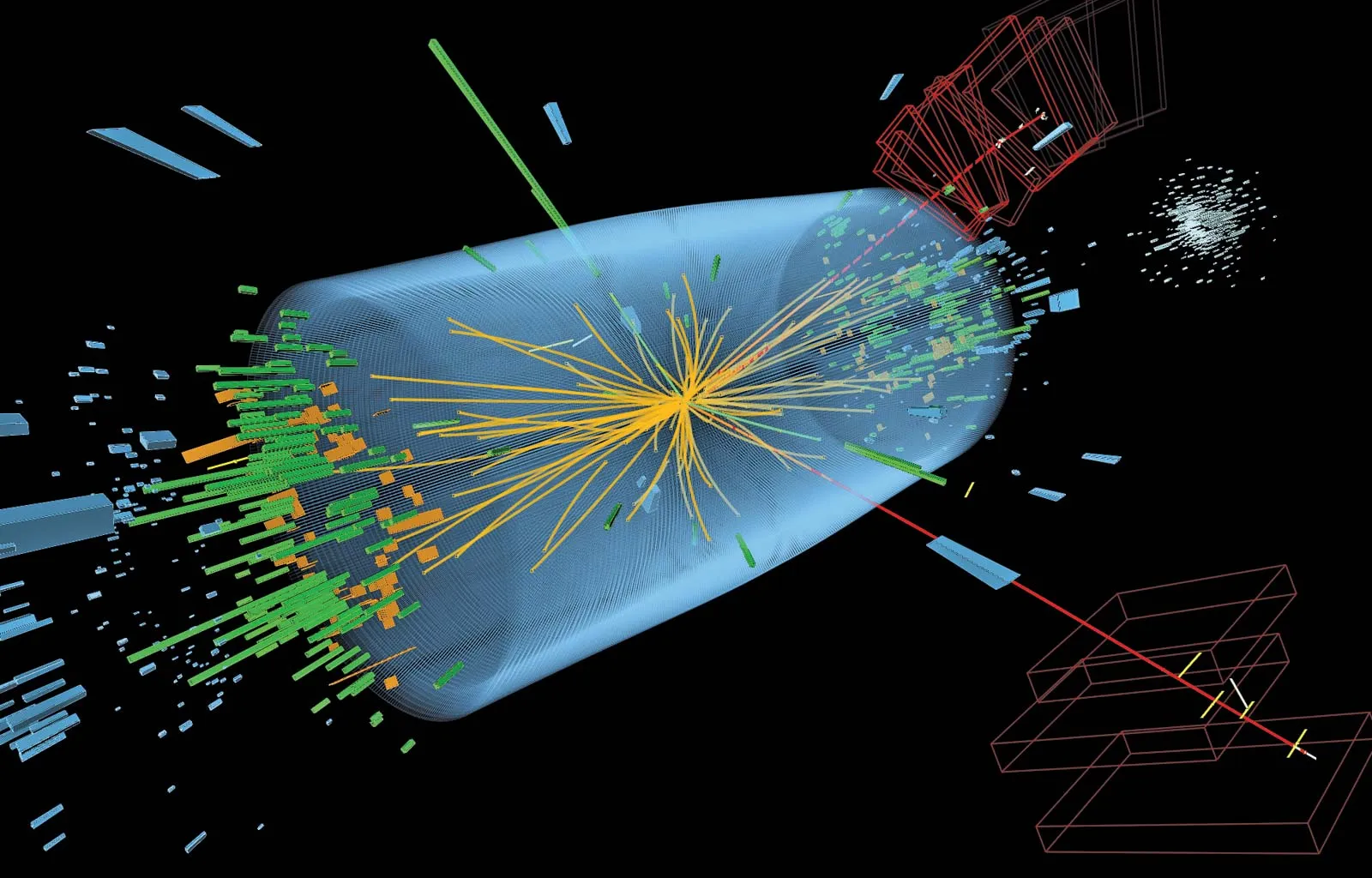
The discovery of the Higgs boson, one of the most significant achievements in modern physics, was made possible by UKRI funding. UK institutions, supported by UKRI’s STFC, were instrumental in the ATLAS and CMS collaborations at CERN, contributing to the discovery that confirmed the existence of the Higgs particle. This landmark finding has broad implications, including new technological advances like medical imaging and data processing techniques that have widespread industrial applications.
Conclusion
The UKRI funding cuts, though part of broader fiscal adjustments, show a critical juncture for the UK’s research community and its global scientific standing. Despite nominal increases in overall R&D spending, the real-term cuts to curiosity-driven and foundational research will likely have significant long-term consequences for the UK’s ability to maintain its leadership in essential scientific fields.
References
- Prospect Union. (2026). "Impact of UKRI Funding Cuts on Research Communities." Retrieved from prospect.org.uk
- Times Higher Education. (2026). "UKRI Funding and Inflationary Pressures." Retrieved from timeshighereducation.com
- The Guardian. (2026). "UK’s Role in Major Global Science Projects at Risk Due to Funding Cuts." Retrieved from theguardian.com
Discussion