How UK Research Funding Works
UK research funding is a stack of separately governed schemes, each with its own money, its own priorities, and its own idea of what it is for, and a researcher's experience of "getting funded" depends enormously on which layer of that mix they are dealing with. This piece works through the stack from the top: the umbrella body and its seven research councils, how a grant is assessed and paid for, funding attached to people rather than projects, the applied and commercial end, the charities that sit outside government, the UK's return to Horizon Europe, and the REF-linked block grant system that runs alongside.
UKRI and the seven research councils
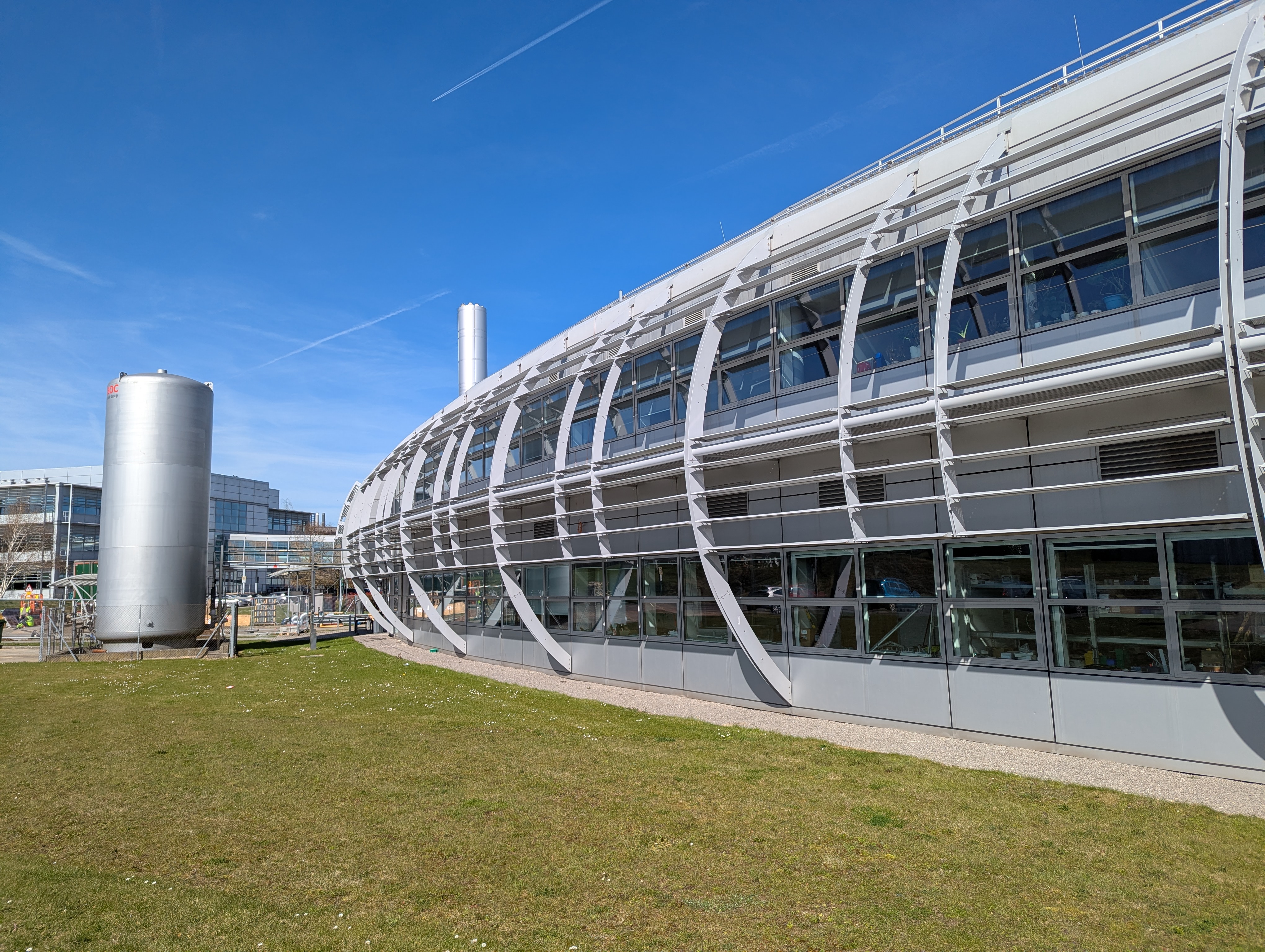
UK Research and Innovation (UKRI) was formed in 2018 by merging the seven previously separate Research Councils, the innovation agency Innovate UK, and Research England, into a single non-departmental public body. UKRI does not run laboratories or employ researchers directly. Its job is to distribute a government-set annual budget across its constituent councils and agencies, each of which retains its own disciplinary remit, its own panels, and its own structure.
The seven councils are the Arts and Humanities Research Council (AHRC), the Biotechnology and Biological Sciences Research Council (BBSRC), the Engineering and Physical Sciences Research Council (EPSRC), the Economic and Social Research Council (ESRC), the Medical Research Council (MRC), the Natural Environment Research Council (NERC), and the Science and Technology Facilities Council (STFC). Each funds research broadly within its named area, though the boundaries are porous such that an interdisciplinary proposal spanning, say, engineering and medicine can be jointly funded across EPSRC and MRC, and UKRI runs cross-council strategic funds specifically for work that does not sit cleanly inside one council's remit.
Research England sits alongside the seven councils but works differently: rather than funding individual grants, it distributes block "quality-related" (QR) funding directly to universities in England based on their performance in the Research Excellence Framework, which is covered below. Scotland, Wales, and Northern Ireland have their own equivalent block-funding bodies (the Scottish Funding Council, the Higher Education Funding Council for Wales, and the Department for the Economy in Northern Ireland respectively), so "Research England" specifically means the England-only arm of this parallel funding track.
How a research grant gets awarded
Most council funding is allocated through one of two routes. Responsive mode funding is investigator-led: a researcher proposes whatever question they think is worth answering, within the council's general remit, and competes against other unsolicited proposals in the same funding round. Directed or strategic funding works the other way round: the council (or the government, via UKRI's strategic priorities) identifies a specific challenge or technology area and issues a call that proposals must address. The balance between the two is a live policy question. A funding system weighted heavily toward directed calls can hit named strategic priorities more reliably, but responsive mode is where unanticipated, curiosity-driven work tends to get funded, since nobody has to have predicted its value in advance for it to qualify.
Whichever route a proposal comes through, it is assessed by peer review: external subject-matter reviewers score the proposal, typically against criteria covering scientific or scholarly excellence, the applicant's track record, and the proposal's fit to the scheme's aims, and a panel of assessors then ranks proposals against each other and draws the funding line at whatever point the available budget runs out. Being scored as fundable is not the same as being funded. In a competitive round, a proposal can be assessed as excellent and still miss out purely because the money ran out before it was reached.
Grants are paid on the Full Economic Cost (FEC) model: a grant's stated cost is meant to reflect the true total cost of doing the work, including a share of the university's overheads (buildings, utilities, central administrative support). UKRI typically funds 80% of FEC, with the host university expected to cover the remaining 20% from its own resources. This is one of the most consequential mechanics in the system: it means every grant a university wins costs the university money as well as bringing money in, and it is a large part of why universities care so much about winning grants with strategic fit rather than maximising the number of grants held.
Funding attached to people
Alongside project grants, a substantial share of research funding is attached to people rather than to a specific piece of work. PhD funding mostly runs through Doctoral Training Partnerships (DTPs) or Centres for Doctoral Training (CDTs): a council funds a consortium of universities with a block allocation of studentships, and the consortium then recruits and selects the students who will hold them. This is why PhD funding feels like applying to a university rather than applying to UKRI: from a prospective student's point of view, it largely is, even though the money underneath ultimately comes from the same research council system described above.
Individual fellowships work differently again: schemes such as UKRI's Future Leaders Fellowships fund a specific person's salary and research costs for a fixed period, usually at a career transition point (finishing a postdoc and establishing an independent research programme, for instance), and the funding is portable, following the fellow rather than tied to a single institution or project.
Innovate UK
Innovate UK is UKRI's innovation agency, and its money runs differently from the research councils' curiosity-driven or strategic-academic funding: it exists to de-risk near-market innovation led by businesses. Its Smart Grants fund business-led research and development projects, assessed heavily on commercial viability and route to market alongside technical merit, a different balance of criteria from an academic peer-review panel. Innovate UK also runs the Catapult network, a set of physical innovation centres (the High Value Manufacturing Catapult and the Offshore Renewable Energy Catapult are two of several) that give businesses, particularly smaller ones without their own R&D infrastructure, access to specialist equipment and expertise they could not otherwise afford.
The practical effect of having Innovate UK inside the same UKRI umbrella as the research councils is that a single piece of underlying science can, in principle, be funded across its entire lifecycle within one public system: a research council grant for the foundational research, a Future Leaders Fellowship for the person who develops it further, and an Innovate UK Smart Grant for the business that eventually commercialises it, rather than that work needing to hop between entirely separate funding ecosystems as it matures.
Beyond UKRI: charitable and independent funders
A significant share of UK research, particularly in biomedical science, is funded not by government but by charities with their own endowments and own priorities. The Wellcome Trust is the largest of these by a wide margin, with an endowment that lets it fund biomedical and health research at a scale comparable to a national funding council, and with considerably more flexibility than a government body operating under annual spending settlements and parliamentary scrutiny. Disease-specific charities such as Cancer Research UK and the British Heart Foundation fund large amounts of directly relevant research from public donations, and learned societies and foundations, the Royal Society, the British Academy, and the Leverhulme Trust among them, run smaller but often prestigious fellowship and grant schemes that matter disproportionately to the careers of the people who hold them.
Charitable funders can move faster than government funding cycles allow, they can fund work government funding is politically or bureaucratically reluctant to touch, and they answer to a board and a donor base rather than to a spending review, which changes what kinds of research risk they are willing to back. A researcher whose work does not fit neatly into a research council's current strategic priorities often has a different chance of funding through a charitable route instead.
Horizon Europe
Horizon Europe is the European Union's main research and innovation funding programme, and UK access to it became uncertain after the UK left the EU, since association to the programme required a negotiated agreement. During the period when that agreement was unresolved, UKRI ran a domestic Horizon Europe Guarantee scheme, paying UK-based recipients of Horizon Europe grants directly from UK public funds in place of the EU payments they could not receive, specifically to stop UK researchers losing out on funding they had already competitively won while the political question was settled above their heads.
The UK subsequently secured associate membership of Horizon Europe, restoring UK access to the programme's schemes, including European Research Council grants (large, long-duration awards for individual investigator-led research, widely regarded as some of the most prestigious funding in European science) and Marie Skłodowska-Curie fellowships for early-career researcher mobility. Association carries a financial contribution as its price of entry, calculated against the UK's expected level of participation, and this trade-off, real money paid in for access to a much larger pool of collaborative and individual funding, is a contested policy question: critics of association argue a "Plan B" of purely domestic replacement schemes would keep more direct control over UK research spending, while supporters point to the scale of the collaborative networks and funding pool that association buys access to.
REF and QR funding: the parallel track
Alongside all of the grant-based funding described above is a separate mechanism: the Research Excellence Framework (REF), a periodic assessment (roughly every six to seven years) of the research produced by UK universities, scored across three components: the quality of research outputs themselves, the wider impact of that research beyond academia, and the research environment an institution provides. REF results feed directly into "quality-related" (QR) funding, a block grant Research England (and its devolved-nation equivalents) pays to universities based on their REF performance, which the university can then spend at its own discretion.
This two-track structure, competitive project grants from the research councils running alongside REF-linked block funding, is often called the dual support system: block funding is meant to give universities the flexibility to invest in speculative work, seed new research directions, and support activity that would never survive a competitive grant panel, while grant funding delivers money tied to a specific, externally assessed proposal. The system, however, draws criticism: REF's scale and stakes for a university's income create strong incentives to manage research strategically around the assessment itself, and the "impact" component in particular has been criticised for rewarding research whose value is legible to an assessment panel over research whose value is uncertain in advance, which is an awkward tension for a mechanism partly designed to protect that kind of speculative work.
Where the money is tightening
The government's headline R&D commitment, a total of £86 billion over five years, with £38.6 billion of that routed through UKRI, represents a very large sum, but the more consequential question for researchers is the allocation and its trajectory once inflation is accounted for, and both have shifted markedly toward strategic and applied priorities at the expense of responsive-mode, curiosity-driven funding in recent settlements. This site's companion piece, Report on the Effects of UKRI Funding Cuts, goes into that specific effect in detail. A funding system with this many separate routes (councils, fellowships, Innovate UK, charities, Horizon association, QR block funding) does not experience a uniform cut.
The people currently in charge, and a machinery-of-government shake-up
UKRI's day-to-day leadership sits with its Chief Executive, Professor Sir Ian Chapman, in post since August 2025 and previously chief executive of the UK Atomic Energy Authority, a background in large-scale nuclear and fusion research infrastructure. Above UKRI sits a government department. In July 2026, incoming Prime Minister Andy Burnham abolished the Department for Science, Innovation and Technology (DSIT) entirely, folding its responsibilities into a newly created Department for Business, Innovation, Science and Trade (DBIST) under Jonathan Reynolds, previously Business Secretary. Liz Kendall, who had held the science brief as Secretary of State for Science, Innovation and Technology since September 2025, saw that department cease to exist well under a year into her tenure.
Science and technology no longer has a dedicated secretary of state: it now sits inside a combined business and trade portfolio, since it is DSIT that UKRI has reported into and that has argued for the research budget's shape and size against the Treasury. Folding that brief into a business-facing department changes who is in the room when funding priorities get contested, and industry reaction split along predictable lines: technology leaders warned in an open letter that dismantling DSIT was "the wrong change at the wrong time" and risked sending "a terrible signal" to investors and startups, while the reshuffle also produced the UK's first Cabinet-attending AI minister, Kanishka Narayan, appointed Minister of State for Artificial Intelligence with full Cabinet attendance, the first time AI has had a dedicated voice at that level of UK government.




The live fight over STFC's budget
STFC's costs have risen sharply, driven by the type of large facilities and international subscriptions it funds and by projects that came in over budget, revealed to add up to a cost overrun of close to £700 million, against a settlement that stays flat in real terms across the current Spending Review period. The consequence has been put to the particle physics, astronomy, and nuclear physics research community: STFC has asked grant holders to model cuts of 20%, 40%, and 60% to their research funding and to indicate at what point a given project stops being viable at all, with decisions due in the summer of 2026, as this piece is being written.
A prior reduction of around 15% to the same research grants is already estimated to have cost 220 to 260 researcher jobs and to have paused or cancelled several projects, and flagship national facilities, Diamond Light Source among them, alongside the ISIS Neutron and Muon Source, were reportedly asked to model reductions of their own. A further governance controversy has run alongside the budget fight itself: MP Chi Onwurah, who chairs the House of Commons Science, Innovation and Technology Committee, raised concerns about apparent alteration of STFC's own meeting minutes, and UKRI's Chair and STFC's Chair have since had to write directly to the Committee to account for how the cuts were decided and communicated.
A note on currency, and further reading
The people and events named in this piece, the department reshuffle, the STFC budget crisis, and the specific figures involved, are current as of this piece's writing, in a policy area that moves quickly by nature: a select committee inquiry, a further spending announcement, or another reshuffle could shift the details covered here well before the underlying structures described in the rest of this piece change at all. Where currency mattered most, the following sources were checked directly rather than relied on from memory.
- Institute of Physics. UKRI and STFC funding changes: what's happening? iop.org
- Research Professional News (2026). STFC's true cost overrun revealed as nearly £700m. researchprofessionalnews.com
- Campaign for Science and Engineering (CaSE). What is happening with UKRI funding and the STFC cuts? sciencecampaign.org.uk
- UK Parliament, Science, Innovation and Technology Committee. UKRI Chair and STFC Chair write to Committee outlining science research funding cuts. committees.parliament.uk
- Times Higher Education. Onwurah: 'doctoring' of STFC minutes raises governance concerns. timeshighereducation.com
- Chemistry World. Science department abolished as UK's new prime minister Andy Burnham appoints first cabinet. chemistryworld.com
- UKRI. Professor Sir Ian Chapman, Chief Executive. ukri.org
- Research Professional News. UKRI allocated £39bn budget over next four years. researchprofessionalnews.com
Discussion