Comments on a Husserlian Ontology of Physics
These are my comments on the paper: Jobst Landgrebe and Barry Smith’s A Husserlian Ontology of the Science of Physics (2026), which tries to build a formal ontology of physical entities using Husserlian categories, and then use that ontology to say something concise about what it means for a photon, a quark, or a gluon to be posited by a physical theory at all.
The life-world and the mathematisation of nature
The background to Landgrebe and Smith’s project is Husserl’s late work, The Crisis of European Sciences and Transcendental Phenomenology, and its central historical claim is about Galileo. Before Galileo, nature was given to us the way it is still given to us before we become acquainted with the tools of physical models: as a qualitatively rich, perceptually variable, practically engaged-with surrounding world - what Husserl calls the life-world, or Lebenswelt. Galileo’s innovation was to project an idealised mathematical structure onto this life-world giving rise to perfectly straight lines, frictionless motion, exact and infinitely divisible magnitudes, none of which is ever actually encountered in experience but all of which can be approximated by it. Husserl’s point is that a substitution happened alongside this achievement, and the substitution got forgotten: the idealised mathematical structure was largely taken to be the true nature underlying appearances, while the life-world that motivated and grounded the idealisation in the first place was demoted to “mere appearance.”
Bound idealities without Anschauung
Husserl’s general theory of evidence holds that to have evidence for the existence of an entity, or for the truth of a proposition, we need a fulfilled intuition (Anschauung) - something given to us either by perception, or by the other kind of intuition mathematicians report when they grasp the validity of an argument i.e. logical inductions and syllogisms. Landgrebe and Smith apply this directly to the ontology of quantum physics. They state:
“The system elements of quantum physics are instanceless bound idealities, which are only connected to reality via attribution … and Bohr-correspondence. … Yet there is no fulfilled mental act of perception or any other kind of intuition of the photon or other system elements of quantum mechanics such as quarks or gluons.”
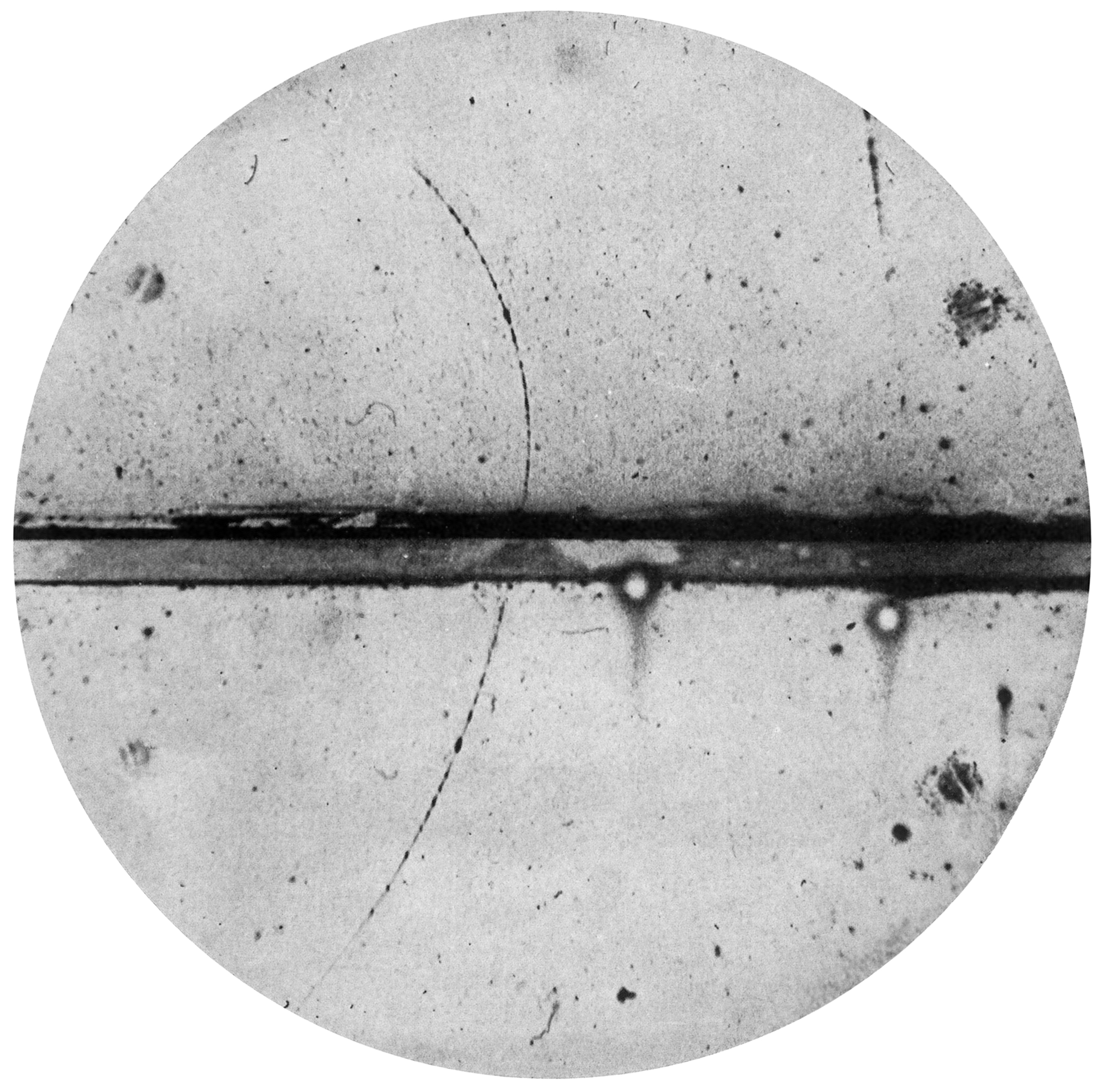
“Bound ideality” is the descriptive term here, and therefore we must be precise about what it means. Husserl distinguishes free idealities as ideal objects like numbers or geometric figures, which are constituted independently of any particular empirical instantiation from idealities that are bound to a specific factual, empirical domain. A photon, on this account, is not a free mathematical object like the number seven yet an ideality that is supposed to be bound to physical reality. But unlike a chair or a tree, which we can straightforwardly perceive and thereby fulfil our intuition of, nothing about a photon is ever directly perceived. What we have instead is a mathematical formalism, and a chain of instrumental attributions a click in a detector, a track in a cloud chamber, a value read off a dial that are correlated with the formalism via Bohr’s correspondence principle and its descendants. The entity is posited, defined mathematically, and then bound to the observable world through inference and correspondence rather than given to us outright. It is real in the sense that the theory is extraordinarily well-confirmed, but it is not real in the sense of ever having been the object of a fulfilled Anschauung, for anyone, ever.
An ontology of physics’ entities
To make this precise, Landgrebe and Smith set out a top-level taxonomy of what physics talks about, splitting the general category of “physics entity” into system entities (elements, relations, and whole systems), magnitudes (qualities and process characteristics), and models (textual, graphic, and mathematical). Redrawn as an indented taxonomy, with the paper’s own examples attached to each leaf category, it looks like this:
-
physics entity
-
system entity
- system elemente.g. photon
- system relatione.g. electromagnetic interaction
- systeme.g. Pfleegor–Mandel photon system
-
magnitude
- continuant qualitye.g. mass
- process characteristice.g. speed of light
-
model
- textual model
- graphic modele.g. geometric model
- mathematical modele.g. Pfleegor–Mandel superposition equation
-
system entity
The category most important in the paper is system relation. A photon (system element) is one thing to give an ontology of; the electromagnetic interaction (system relation) that a photon mediates is another.
System relations as bound idealities: the four forces
Classical physics recognises two forces - gravitation and electromagnetism - and treats them as universals: fixed, theory-independent features of the world that any adequate physical system modelling has to include. Modern physics recognises four: those two plus the weak and strong nuclear forces. Landgrebe and Smith therefore argue a change in the ontological status of the items on it:
“The system relations of modern physics are the four interactions (electromagnetism, gravitation, the weak and the strong force). These are bound idealities because they are defined mathematically using the variants of QFT equations and gravitation theory (Einstein’s field equations). The phenomena that we measure (the four forces) are then bound to those equations (in the sense of free ideality structures). But, and this shows to what extent they are bound idealities, the exact character of the bound idealities weak and strong force depend on the QFT variant we use. Thus, all system components of modern physics are bound idealities. In classical physics, which knows only gravitation and electromagnetism, these forces are of course universals.”
The argument is that a bound ideality’s exact identity conditions are defined by the choice of formalism used to define it. Which QFT variant you adopt intrinsically changes what, “the weak force” is taken to be at a formal level, even though the measured phenomena it is bound to stay the same. A universal, by contrast, is not hostage to a choice of formalism in this way - it is simply there, prior to any particular mathematical treatment of it. Husserl diagnosed in The Crisis: an intuitively-graspable feature of the life-world (a push, a pull, a fall) replaced by a mathematically-defined entity that is real only relative to a formalism.
Where this leaves categorial intuition
Husserl’s account of categorial intuition holds that structured, non-sensuous objects such as states of affairs, relations, and once a formalism is sufficiently internalised, its theoretical entities, can be given to a prepared consciousness, without only being inferred or stipulated. A trained physicist therefore does not specifically calculate with a Hilbert space but after enough acquaintance with the formalism, they can be said to intuit certain aspects of its structural features directly, in something like the way a mathematician intuits a proof’s validity rather than verifying it step by step. This is what keeps “bound ideality” from collapsing into “useful fiction.” A photon is not perceived and never will be, but it is not arbitrary either: it is a founded object, constituted through a rule-governed, historically sedimented extension of ordinary perceptual experience - answerable to that experience through instrumental attribution at every step, even though it never terminates in a fulfilled Anschauung of the kind a chair or a tree affords.
This is, in a similar sense, the same problem my next article will take up in a companion piece on Anschauung and quantum mechanics: whether the strangeness of physical theory is a fact about the world or a fact about the kind of minds doing the theorising. Landgrebe and Smith’s answer, formalised as an ontology rather than argued informally, is that it is neither. The photon is not strange because our evolved intuition happens to fall short of it, and it is not a fiction because no intuition reaches it. It is a bound ideality: a specific, formally tractable ontological category that modern physics needed to invent in order to say what it is talking about once it stopped being able to point.
References
Landgrebe, J., & Smith, B. (2026, June 15). A Husserlian Ontology of the Science of Physics. Manuscript.
Discussion